

Solar for everyone: Pay Small Small
Don't let the cost stop you. Get this system installed today and pay in easy monthly installments over 6-24 months.
View Financing PlansAs your sure plug for reliable solar product supplier and installation, we at Rayspark Solar provides top-tier products to meet everyone's budget and exact needs. Call/WhatsApp: +234 706 482 6896
In the 2026 Nigerian commercial market, an industrial solar system setup typically costs between ₦28,000,000 for a 40kVA commercial package, ₦42,000,000 to ₦58,000,000 for a 60kVA setup, ₦75,000,000 to ₦98,000,000 for a 100kVA system, ₦90,000,000 to ₦125,000,000 for a 120kVA configuration, ₦150,000,000 to ₦210,000,000 for a 200kVA microgrid, and up to ₦350,000,000+ for large 500kVA multi-megawatt industrial complexes. These systems utilize high-voltage lithium LiFePO4 battery banks, three-phase hybrid inverters with generator synchronization, and Tier-1 bifacial solar panels, delivering total energy independence and slashing monthly diesel expenses by 70% to 90%.




Our Team
Industrial Solar Capacity Matrix: 40kVA to 500kVA
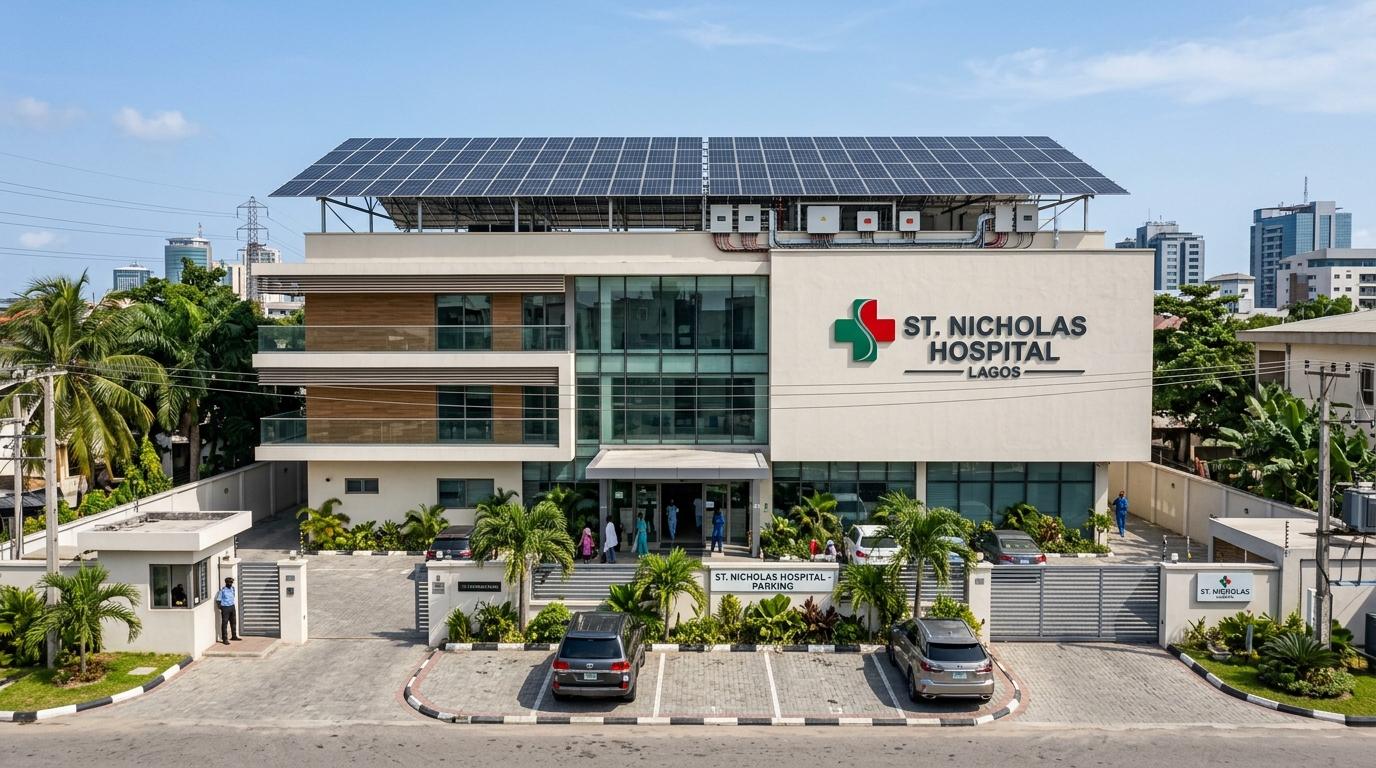
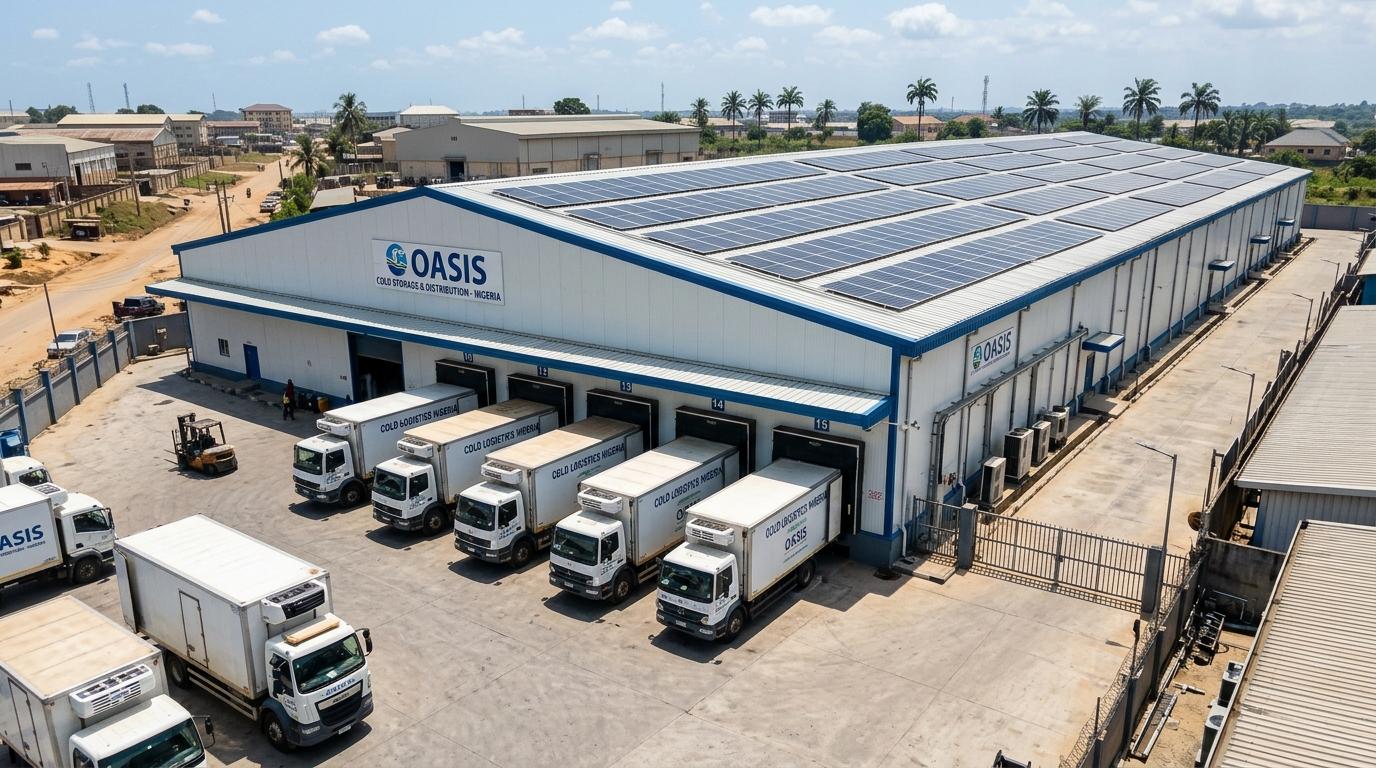
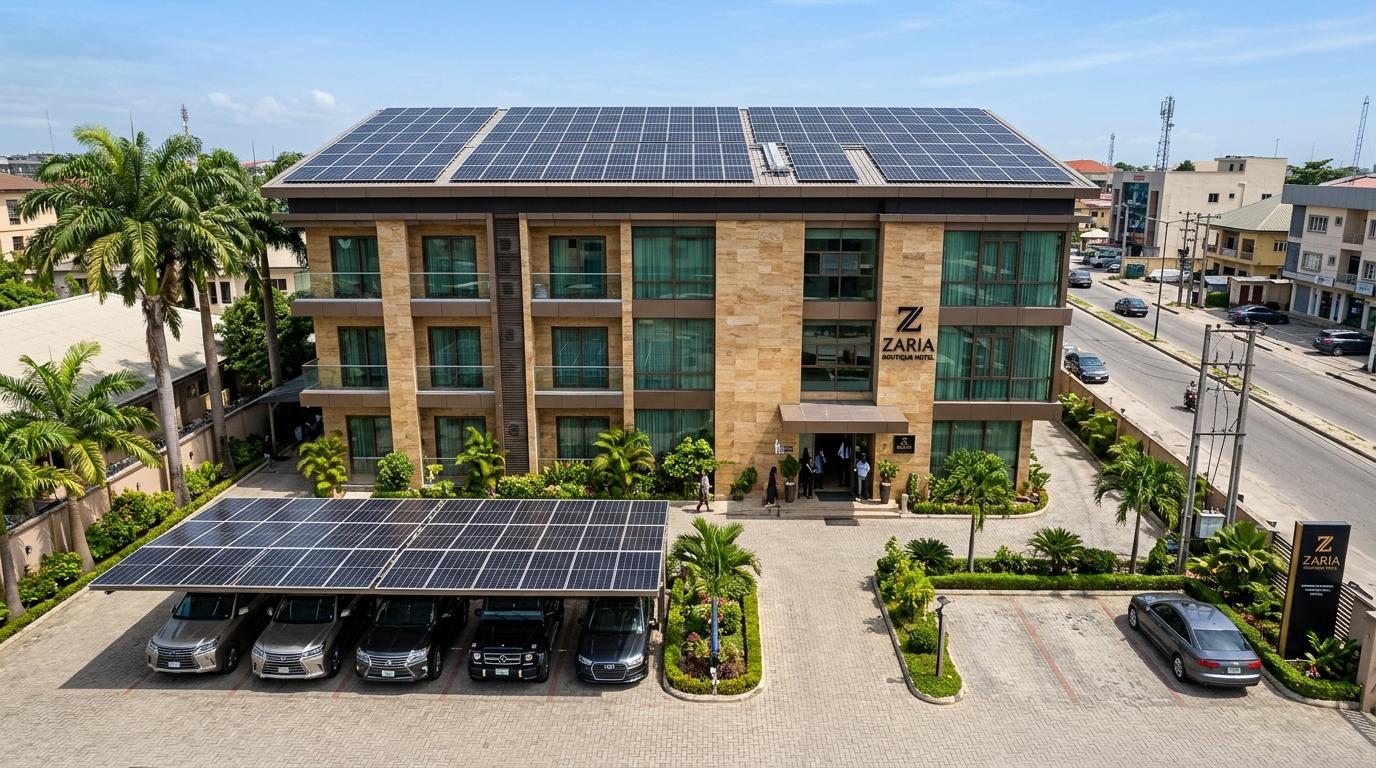
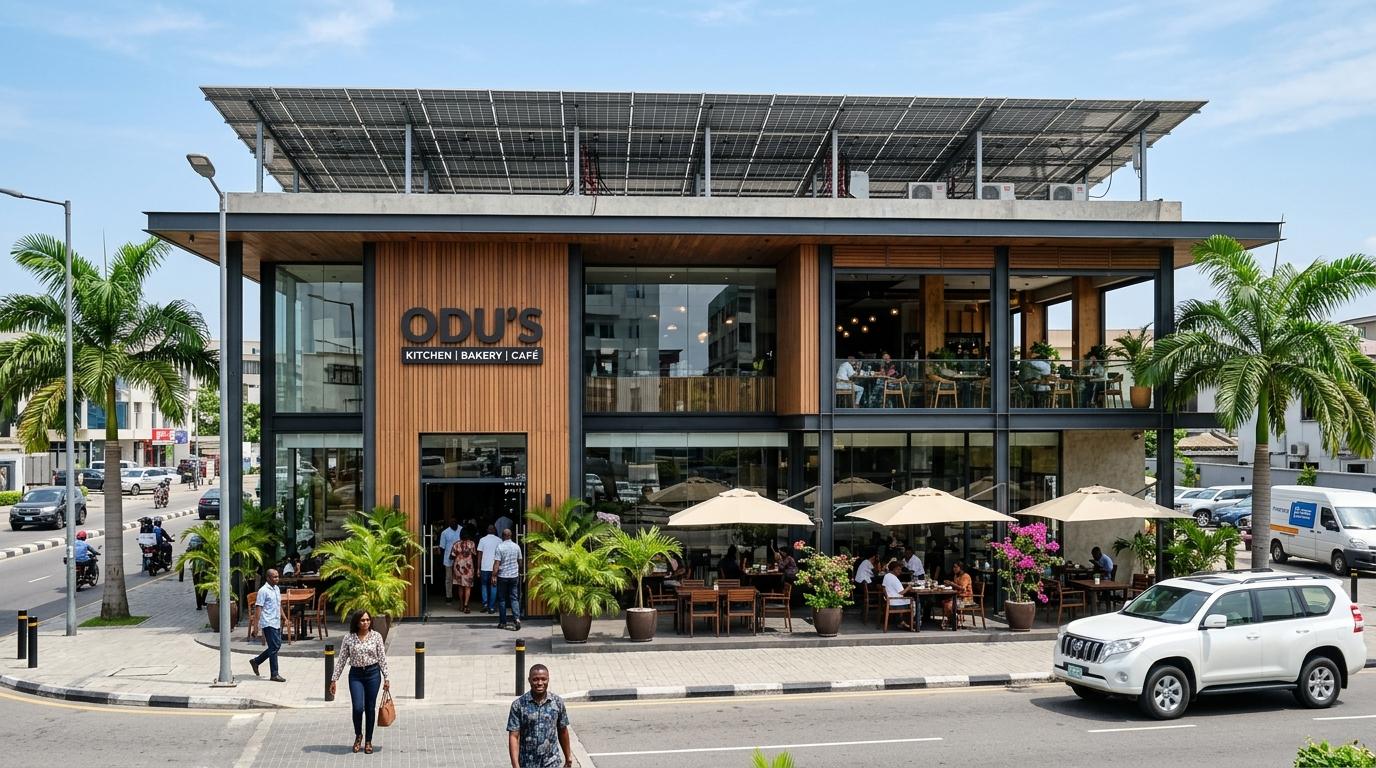
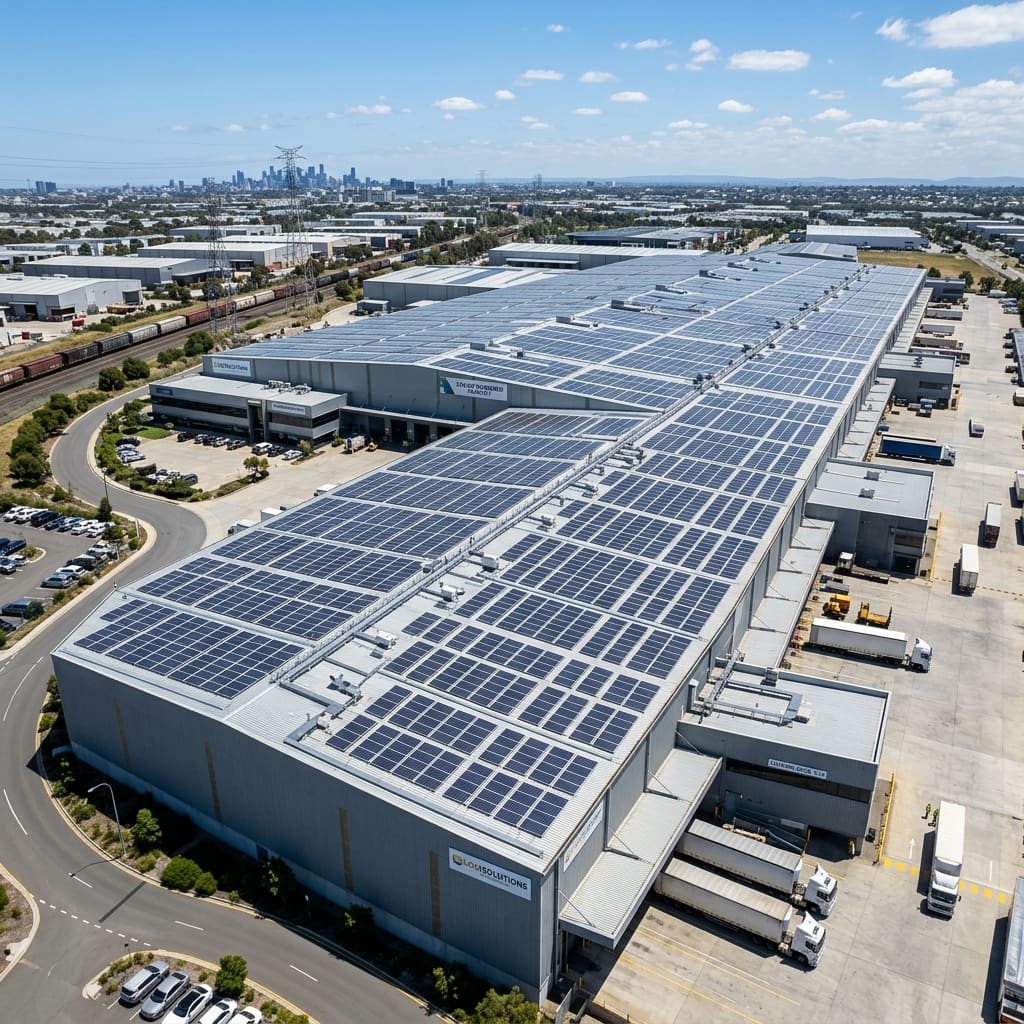
Commercial facilities such as factories, cold storage warehouses, hotels, corporate headquarters, schools, estates, hospitals, and shopping plazas require balanced three-phase power that can manage both baseline running loads and severe inductive motor startup surges.
The table below outlines the engineering specifications, panel counts, battery capacities, and expected energy yield across industrial power categories in Nigeria.
| System Rating | Continuous Active Load (kW @ 0.8 PF) | Solar Panel Array (550W - 650W N-Type) | Lithium LiFePO4 Storage (kWh) | Daily Solar Generation (kWh) | Typical Facility Applications |
|---|---|---|---|---|---|
| 40kVA | 32 kW | 48 – 64 Panels (26.4kW – 35.2kW) | 60 kWh – 80 kWh | 120 – 160 kWh | Multi-story offices, specialist clinics, large restaurants, boutique hotels |
| 60kVA | 48 kW | 72 – 96 Panels (39.6kW – 52.8kW) | 90 kWh – 120 kWh | 180 – 240 kWh | Mid-sized private hospitals, commercial cold rooms, secondary schools, filling stations |
| 100kVA | 80 kW | 120 – 160 Panels (66kW – 88kW) | 150 kWh – 200 kWh | 300 – 400 kWh | 4-star hotels, manufacturing warehouses, medical diagnostic centers, large estates |
| 120kVA | 96 kW | 144 – 192 Panels (79.2kW – 105.6kW) | 180 kWh – 240 kWh | 360 – 480 kWh | Large food processing hubs, shopping malls, university faculties, mixed-use complexes |
| 200kVA | 160 kW | 240 – 320 Panels (132kW – 176kW) | 300 kWh – 400 kWh | 600 – 800 kWh | Industrial processing plants, major general hospitals, estate mini-grids, waterworks |
| 500kVA | 400 kW | 600 – 800 Panels (330kW – 440kW) | 600 kWh – 1,000 kWh | 1,500 – 2,000 kWh | Heavy industrial factories, pharmaceutical plants, seaport terminals, campus microgrids |
Critical Components of an Industrial Solar Setup
An industrial solar power installation is an integrated electrical power plant that must run 24 hours a day, 7 days a week, under harsh climatic and electrical conditions. Selecting substandard components results in premature hardware degradation and costly system downtime.
1. Three-Phase Industrial Hybrid Inverters
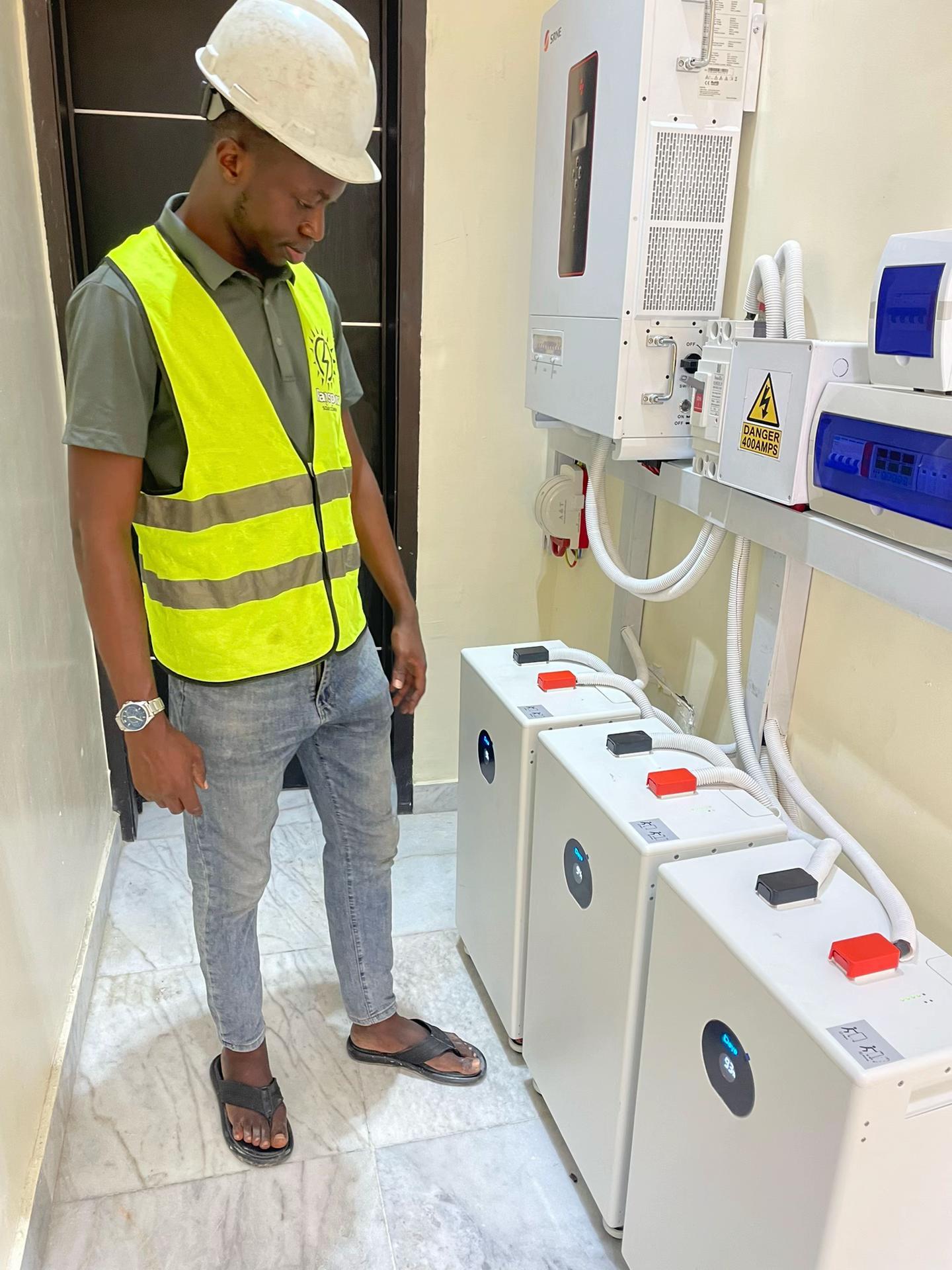
The inverter system acts as the central brain and power conditioner. In industrial setups, three-phase commercial hybrid inverters are installed either as high-capacity standalone units or parallel-synchronized clusters.
Based on extensive installations across Nigerian factories, warehouses, and commercial estates, the best-tested and most trusted inverter brands in Nigeria are:
- Overall Best Brands to Buy: Deye, Alpsolar (aIpsolar), Victron Energy (Vetrone), SRNE, and Solis. These represent the highest tier of engineering, delivering up to 2x surge headroom for heavy inductive motors, rapid sub-10ms automatic switching, and seamless generator ATS synchronization.
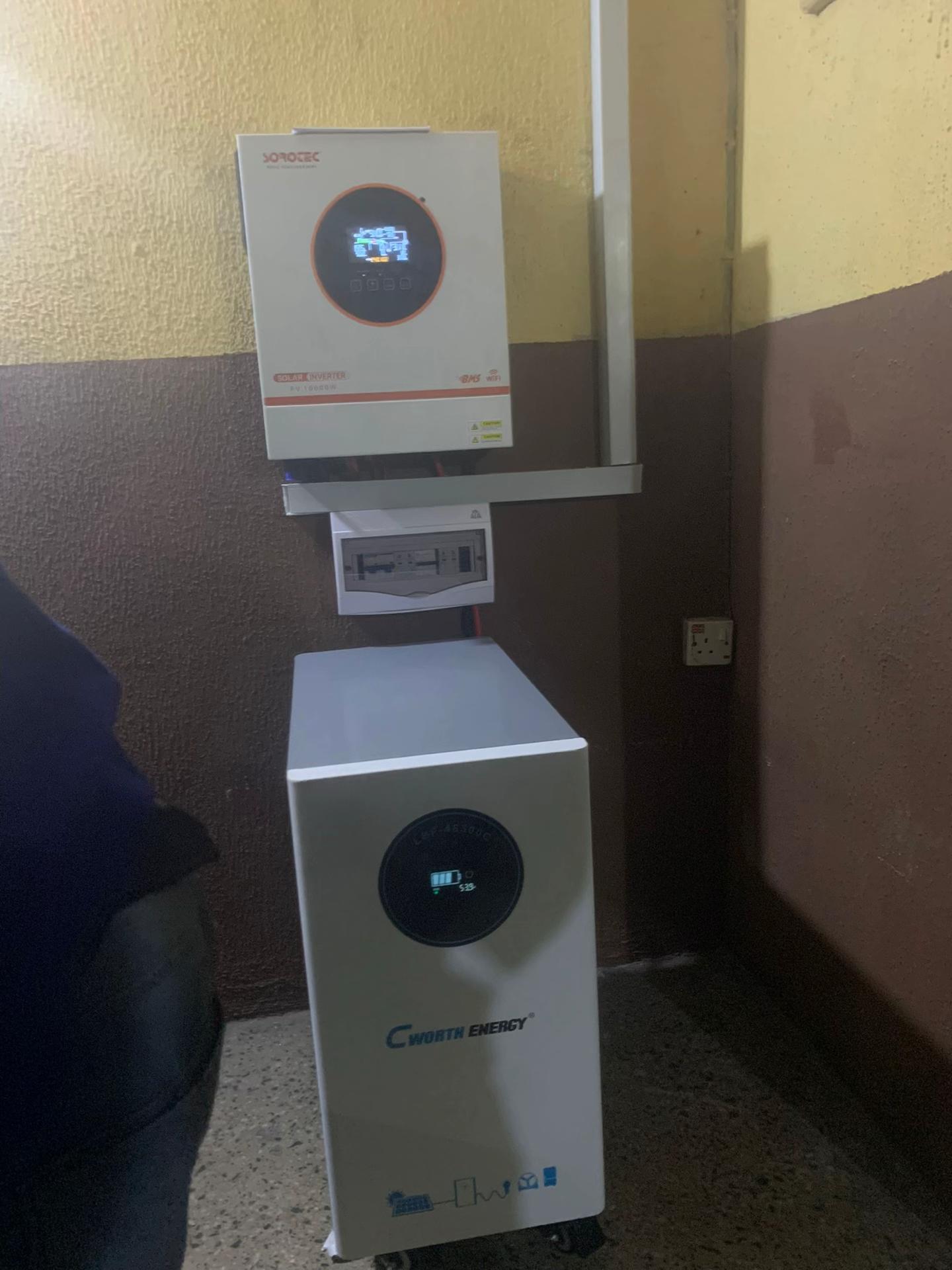
- Highly Recommended Commercial Contenders: Followed closely by dependable commercial brands such as Cworth (C worth), Growatt (MAX & WIT commercial series), Lvtopsun, Itel, Ecolion, Luxwatt, and Luxsun.
2. High-Voltage Lithium Iron Phosphate (LiFePO4) Battery Banks
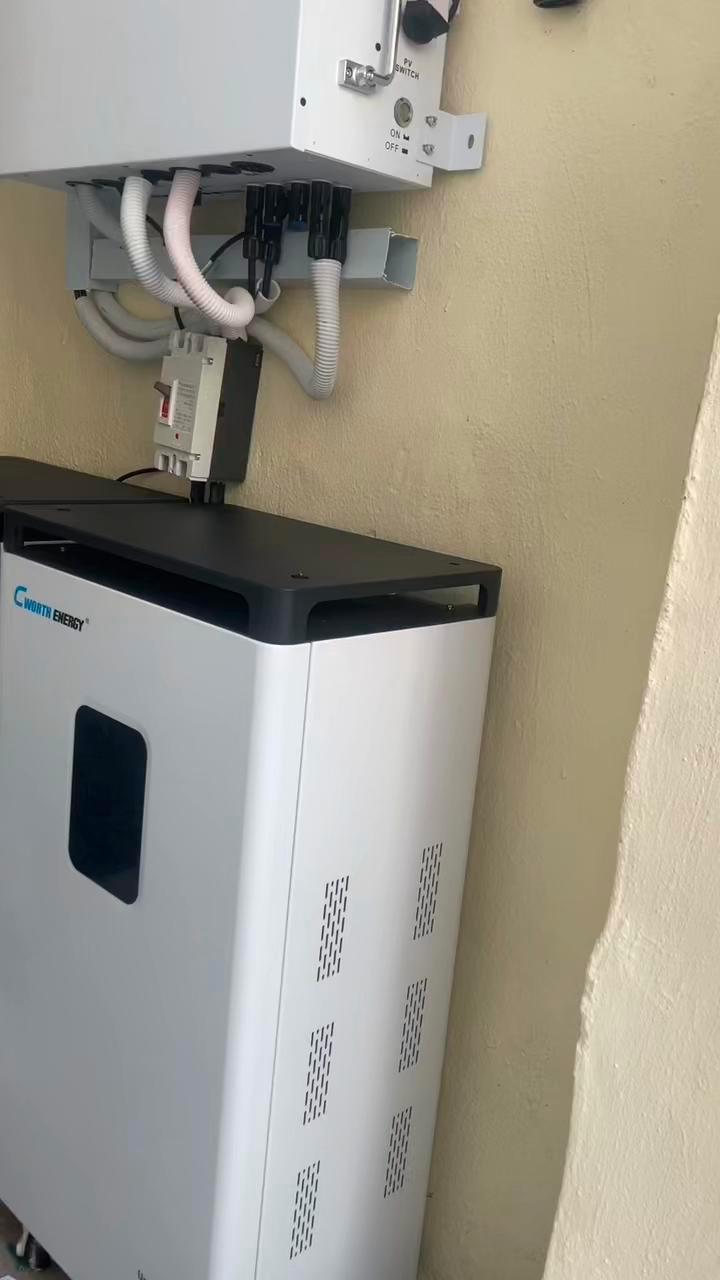
Industrial applications have completely phased out tubular lead-acid and gel batteries due to their short lifespan, thermal degradation, and slow charging rates. Modern commercial installations utilize high-voltage (HV) LiFePO4 battery cabinets operating between 300V and 800V DC.
- Overall Best Battery Brands to Buy: Deye (BOS-G modular HV series), Alpsolar (aIpsolar), Victron (Vetrone), and SRNE lithium systems, delivering 6,000 to 8,000 cycles at 80% to 90% Depth of Discharge (DoD) for 12 to 15 years of daily service.
- Tested & Trusted Value Brands: Followed by top-performing storage brands including Cworth (C worth), Lvtopsun, Ecolion, Itel, Luxwatt, and Luxsun, equipped with intelligent Battery Management Systems (BMS) for thermal safety under Nigerian climatic conditions.
3. Tier-1 N-Type TOPCon and Bifacial Solar Panels
To maximize energy yield per square meter of roof or ground space, industrial installations utilize Grade-A Tier-1 solar panels.
- Recommended Panel Types: Monocrystalline N-Type TOPCon bifacial modules rated between 550W and 650W.
- Key Advantage: Bifacial panels capture direct irradiance on the front glass while absorbing reflected ambient light from the rear surface, providing up to 15% to 25% additional power yield.
- Proven Manufacturers: Jinko Solar (Tiger Neo), Longi Solar (Hi-MO X6), Canadian Solar (BiHiKu), Trina Solar (Vertex), and JA Solar.
4. Galvanized Mounting Structures and Panel Stands
Nigeria experiences intense tropical storms, high wind speeds, and heavy rain. Mounting hardware must be engineered for structural endurance.
- Roof Mounts: Anodized aluminum rails with stainless steel 304 clamps and EPDM rubber weatherproofing gaskets to prevent roof penetrations from leaking.
- Ground Mounts: Hot-dip galvanized steel frames with concrete footings engineered to withstand wind loads of up to 140 km/h and resist corrosion for over 30 years.
5. Industrial DC and AC Cabling, Combiner Boxes, and Switchgear
Using undersized or counterfeit cables causes resistive heat losses, voltage drop, and fire hazards.
- DC Side: Double-insulated, UV-resistant, halogen-free, tinned pure copper solar cables (6mm², 10mm², or 16mm²) with IP68 Staubli MC4 connectors.
- AC Side: 4-core steel-wire armoured (SWA) multi-strand copper cables sized between 35mm² and 185mm² depending on current capacity and distance from inverter to distribution board.
- Safety Switchgear: Type 1+2 DC and AC Surge Protection Devices (SPDs), dedicated DC circuit breakers, motorised changeover switches, and isolated earth pit installations achieving a soil resistivity reading below 5 ohms.
Our Comprehensive Site Assessment Process
A successful industrial installation begins with a rigorous, data-driven site assessment. At Rayspark Solar, our electrical engineers visit your premises to conduct an in-depth energy and structural audit before generating final blueprints:
- Digital Load Profiling and Power Quality Logging: We deploy three-phase power quality analyzers over a multi-day logging cycle to record continuous active power (kW), reactive power (kVAR), peak inductive motor startup surges, phase balance, voltage fluctuations, and harmonic distortion.
- Structural Roof and Space Inspection: We inspect your building's roof trusses, purlins, and roofing sheets to confirm load-bearing capacity (approximately 18kg to 22kg per square meter for panel and frame arrays). For ground arrays, we survey soil mechanics and tilt orientation.
- Solar Irradiance and Shading Modeling: We analyze 3D shading vectors from surrounding trees, telecommunication masts, and adjacent buildings using digital solar azimuth modeling to determine the optimal 10° to 12° south-facing tilt angle.
- Integration Assessment: We audit your existing electrical panel boards, automatic changeover switches, transformer substations, and generator sets to guarantee seamless synchronization.
How Industrial Solar Integrates with the Nigerian Grid and Diesel Generators
Many commercial facilities in Nigeria operate under Band A or Band B grid classifications while relying heavily on 50kVA to 500kVA diesel generators. Our industrial systems are engineered to work in smart harmony with existing power sources:
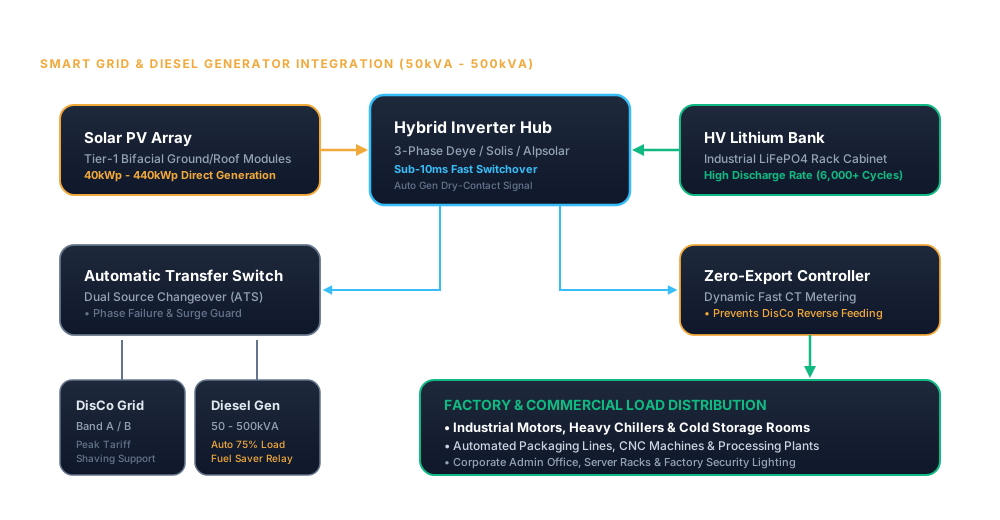
- Solar Priority Mode: When sunlight is active, the system powers your facility directly from the solar array. Any excess generation charges the lithium battery bank.
- Grid Peak Load Shaving: When grid electricity is present, the hybrid inverter supplements the grid with solar power to reduce peak tariff billing. When the grid fails, the system switches to battery power in less than 10 milliseconds, preventing computers, cold room motors, and machines from restarting.
- Automated Generator Optimization: If extended rainy weather depletes the batteries below a set threshold (e.g., 20%), the inverter signals your generator to start via dry-contact relays, runs it at its most fuel-efficient 75% load capacity to recharge the battery bank, and shuts it off automatically once 80% state-of-charge is achieved.
Monthly Diesel Savings and Return on Investment (ROI)
With diesel prices in Nigeria hovering between ₦1,200 and ₦1,450 per litre, running a commercial generator set for 12 to 18 hours daily consumes millions of Naira every month.
Financial Comparison: 100kVA System (80kW Load)
- Generator Baseline: A standard 100kVA diesel generator operating under an average 60kW facility load burns roughly 18 litres of diesel per hour.
- Monthly Diesel Consumption (14 Hours/Day): 14 hours × 18 litres = 252 litres per day. Over 30 days, this equals 7,560 litres.
- Monthly Fuel Expenditure: 7,560 litres × ₦1,300/litre = ₦9,828,000 per month (excluding engine oil changes, filters, and mechanic maintenance fees).
- Solar Hybrid Performance: An optimized 100kVA Rayspark Solar installation absorbs 75% to 85% of daytime and nighttime loads, reducing generator runtime to under 3 hours per day.
- Monthly Fuel with Solar: ~1,600 litres × ₦1,300 = ₦2,080,000 per month.
- Net Monthly Savings: Over ₦7,748,000 every single month.
- Payback Period: At an initial turnkey investment of approximately ₦85,000,000, the entire industrial solar system pays for itself in just 11 to 14 months. After this payback window, the facility generates clean, free electricity for the remaining 20+ years of component lifespan.
Installation Timeline: Commissioning Within 3 Days to 1 Week
Because business interruption causes lost revenue, Rayspark Solar utilizes a rapid pre-assembly and staging deployment method:
- Day 1 (Site Logistics and Mounting): Arrival of project engineering crew, staging of certified materials, and structural roof/ground mounting rail installation.
- Day 2 to Day 3 (Panel Stringing and Cabling): Mechanical fastening of solar modules, string array wiring, routing through UV-resistant conduits, and distribution board termination.
- Day 4 to Day 5 (Inverter and Battery Bank Integration): Commissioning of the high-voltage LiFePO4 battery cabinets, inverter installation, automatic transfer switch wiring, and earth resistance certification.
- Day 6 to Day 7 (Testing, Grid/Gen Sync, and Handover): Full thermal imaging inspection, live load synchronization under full motor inrush conditions, mobile cloud monitoring setup, and technical handover to your facility team.
How to Maximize System Longevity and Reliability
- Scheduled Panel Cleaning: Dust and harmattan soot accumulation on panel glass can decrease generation by 15% to 30%. Wash panels with soft water and non-abrasive brushes once every two to four weeks during the dry season.
- Lithium Battery Health Management: Maintain battery ambient temperatures between 20°C and 28°C in a ventilated inverter room. Program charge cut-off voltages to preserve the battery within an 80% Depth of Discharge range.
- Annual Torque and Thermal Audits: Have a certified solar engineer check electrical lug tightness and inspect busbars with a thermal camera annually to identify loose connections before resistance heating develops.
Where to Buy Industrial Solar Equipment in Nigeria
Purchasing industrial solar equipment from unverified roadside importers carries severe financial risk. At Rayspark Solar, all inverters, panels, batteries, and switchgear are sourced directly from Tier-1 global manufacturers and come backed by comprehensive manufacturer warranties.
We handle end-to-end site assessments, engineering designs, procurement, and turnkey installations across all 36 states in Nigeria. Whether your facility is in Lagos, Ibadan, Abuja, Port Harcourt, Kano, Onitsha, or Akure, our mobile installation teams deploy directly to your site.
- Phone / WhatsApp: +234 706 482 6896
- Direct WhatsApp Chat: https://wa.me/2347064826896
- Head Office: Alabama Street, Akala Way, Ibadan, Oyo State
- Lagos Office: 231 Herbert Macaulay Way, Yaba, Lagos State
- Akure Office: 24 Aule Road, Akure, Ondo State
- TikTok: @omowumitaye / @raysparksolar
- Facebook: Rayspark Solar on Facebook
To calculate preliminary estimates for your specific electrical load, you can also use our free interactive Rayspark Solar Calculator.
Our Team
Frequently Asked Questions (FAQs)
Can a 60kVA or 100kVA solar system start heavy industrial cold room compressors and central ACs?
Yes. Industrial hybrid inverters such as Deye, SunSynk, and Growatt MAX feature a 2x surge rating for 10 to 20 seconds. This surge buffer easily absorbs the Locked Rotor Amps (LRA) of heavy inductive motors, chillers, and industrial compressors. For extremely high-capacity motors, we integrate variable frequency drives (VFDs) or soft starters to guarantee smooth motor acceleration without voltage dips.
How much roof space is required for a 100kVA or 200kVA solar array?
A 100kVA system requires approximately 140 to 160 units of 550W panels, which occupies about 360 to 420 square meters of unshaded roof or ground area. A 200kVA setup requires approximately 750 to 900 square meters. If roof space is constrained, our engineers design high-efficiency ground mounts or elevated solar carports.
How does the system handle cloudy or rainy days during the Nigerian wet season?
Modern N-Type TOPCon and bifacial panels utilize diffused ambient sunlight to generate 25% to 40% of their rated capacity even during overcast rainfall. Furthermore, your system's lithium battery storage is sized to provide 12 to 24 hours of autonomous reserve power, supplemented automatically by your generator or the national grid if battery levels drop below preset limits.
Can Rayspark Solar deploy to northern or eastern states outside southwest Nigeria?
Yes. Rayspark Solar maintains mobile industrial project teams that travel to all 36 states and the Federal Capital Territory (Abuja). Our logistics cover secure transport, on-site civil works, structural assembly, and commissioning anywhere in Nigeria.
Can we expand our industrial solar capacity in the future?
Yes. All commercial hybrid inverters supplied by Rayspark Solar support parallel expansion. If your factory or business grows, you can seamlessly connect additional inverters, add more high-voltage battery cabinets, and install extra solar strings without replacing your initial investment.
Ready to Power Your Facility with Industrial Solar?
Stop burning your business profits on diesel generators and erratic grid bills. Contact Rayspark Solar today to schedule a comprehensive site assessment and receive an engineered commercial proposal.
Call or WhatsApp our Senior Technical Director at +234 706 482 6896 or click here to message us on WhatsApp to get started.