
Solar for everyone: Pay Small Small
Don't let the cost stop you. Get this system installed today and pay in easy monthly installments over 6-24 months.
View Financing PlansAs your sure plug for reliable solar product supplier and installation, we at Rayspark Solar provides top-tier products to meet everyone's budget and exact needs. Call/WhatsApp: +234 706 482 6896
A hospital solar power setup in Nigeria typically costs between ₦26,000,000 for a 40kVA clinic system, ₦42,000,000 to ₦58,000,000 for a 60kVA hospital installation, ₦75,000,000 to ₦98,000,000 for a 100kVA surgical facility, and up to ₦180,000,000 to ₦350,000,000+ for large 200kVA to 500kVA tertiary teaching hospitals. In healthcare settings where human lives depend on zero power interruption, the optimal setup pairs three-phase hybrid inverters with medical-grade pure sine wave output (<2% THD), high-voltage lithium LiFePO4 batteries, and automated generator synchronization.



Our Team
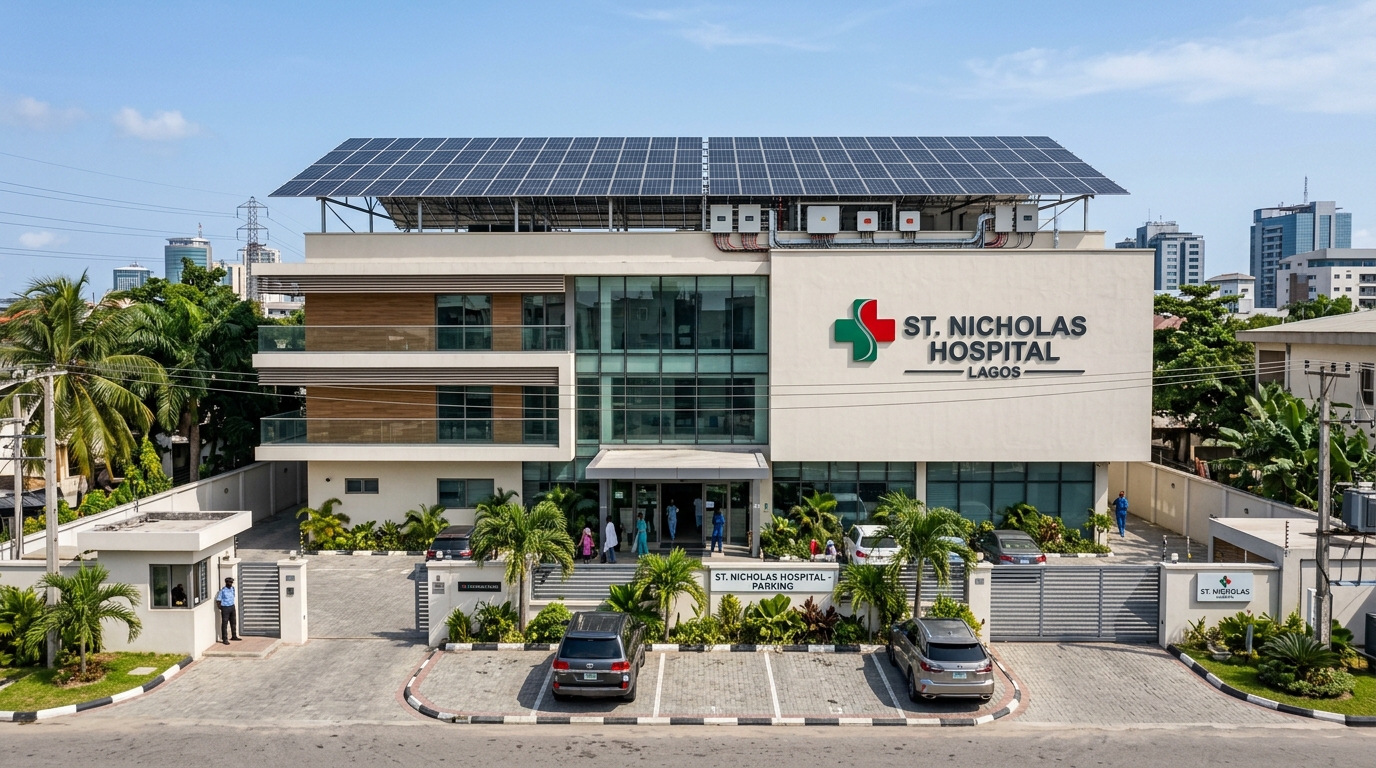
How Much Power Does a Nigerian Hospital Need? (Load Estimation Guide)
Power failure in a hospital is not a mere inconvenience; it is a clinical emergency. When power cuts occur during surgical procedures, in neonatal intensive care units (NICU), or in blood storage facilities, life support systems fail and biological materials spoil.
A hospital's energy demand is determined by bed capacity, surgical load, and diagnostic equipment. The table below provides a clinical load estimation guide across hospital classifications in Nigeria:
| Hospital Tier | Typical System Sizing | Active Load (kW @ 0.8 PF) | Solar Panel Array (550W Bifacial) | Lithium Battery Bank (LiFePO4) | Critical Clinical Equipment Supported |
|---|---|---|---|---|---|
| Outpatient Clinic / Maternity Home | 40kVA | 32 kW | 48 – 64 Panels (26.4kW – 35.2kW) | 60 kWh – 80 kWh | Delivery room lighting, ultrasound, vaccine fridges, patient monitor, basic lab, 6-8 inverter ACs |
| Private Specialist Hospital (20-40 Beds) | 60kVA | 48 kW | 72 – 96 Panels (39.6kW – 52.8kW) | 90 kWh – 120 kWh | 1 Operating theatre, infant incubators, phototherapy units, blood bank, lab centrifuges, 12-16 ACs |
| Comprehensive Surgical Hospital (50-80 Beds) | 100kVA | 80 kW | 120 – 160 Panels (66kW – 88kW) | 150 kWh – 200 kWh | 2 Operating theatres, 4-bed ICU, digital X-ray, dialysis machines, autoclaves, central sterilisation, mortuary cold storage |
| Multi-Specialty Medical Center (80-120 Beds) | 120kVA | 96 kW | 144 – 192 Panels (79.2kW – 105.6kW) | 180 kWh – 240 kWh | 3 Operating theatres, 8-bed ICU/NICU, endoscopy suite, full haematology lab, mortuary, facility water pumps |
| Tertiary / General Hospital (150-300 Beds) | 200kVA | 160 kW | 240 – 320 Panels (132kW – 176kW) | 300 kWh – 400 kWh | CT scanner, fluoroscopy, central oxygen manifold, high-capacity autoclaves, continuous facility cooling |
| University Teaching Hospital Campus | 500kVA | 400 kW | 600 – 800 Panels (330kW – 440kW) | 600 kWh – 1,000 kWh | Full campus electrification, MRI suite, industrial oxygen generation plant, large-scale medical incineration |
Critical High-Load Equipment in Nigerian Hospitals to Account For
When designing a hospital power system, generic load estimates fail because medical equipment produces severe electrical transients, inrush currents, and sensitive electronic harmonics:
- Operating Theatre Equipment: Surgical shadowless lamps, diathermy (electrosurgical units), anesthesia machines, suction pumps, and positive-pressure laminar airflow systems. These require zero millisecond switchover; even a 1-second outage can shut down patient ventilation.
- ICU Ventilators and Infant Incubators: Life-support systems require pure sine wave alternating current with Total Harmonic Distortion (THD) below 2% to prevent sensitive microprocessor resets.
- Diagnostic Radiology (CT Scanners and Digital X-Ray): CT scanners and stationary X-ray units draw sudden, massive pulse power (often 30kW to 80kW for several hundred milliseconds during exposure). The inverter bank must possess adequate short-circuit surge headroom to absorb these instantaneous loads without voltage collapse.
- Autoclaves and Sterilizers: High-pressure steam sterilizers utilize large resistive heating elements (often 6kW to 18kW per chamber) that draw sustained current for 45 to 90 minutes.
- Cold Chain and Laboratory Storage: Blood bank freezers (-20°C to -40°C), mortuary cold rooms, and WHO-certified vaccine refrigerators (2°C to 8°C) run heavy induction compressors with start-up inrush currents 5 to 7 times their running wattage.
- Oxygen Plants and Concentrators: On-site Pressure Swing Adsorption (PSA) oxygen generators utilize high-pressure air compressors that require continuous 3-phase power.
2026 Cost Guide for Nigerian Hospital Solar Systems
The table below reflects complete turnkey pricing in the 2026 Nigerian market, covering three-phase hybrid inverters, Tier-1 bifacial panels, high-voltage lithium battery banks, DC/AC switchgear, lightning protection, and professional engineering commissioning:
| System Capacity | Estimated Cost Range (2026 Nigeria Market) | Recommended Battery Bank | Solar Array Wattage | Estimated Monthly Diesel Savings |
|---|---|---|---|---|
| 40kVA (32kW) | ₦26,000,000 – ₦34,000,000 | 60kWh – 80kWh LiFePO4 | 26kW – 35kW | ₦2,800,000 – ₦4,000,000 |
| 60kVA (48kW) | ₦42,000,000 – ₦58,000,000 | 90kWh – 120kWh LiFePO4 | 40kW – 52kW | ₦4,500,000 – ₦6,500,000 |
| 100kVA (80kW) | ₦75,000,000 – ₦98,000,000 | 150kWh – 200kWh LiFePO4 | 66kW – 88kW | ₦8,000,000 – ₦11,500,000 |
| 120kVA (96kW) | ₦90,000,000 – ₦125,000,000 | 180kWh – 240kWh LiFePO4 | 80kW – 105kW | ₦10,000,000 – ₦14,000,000 |
| 200kVA (160kW) | ₦150,000,000 – ₦210,000,000 | 300kWh – 400kWh LiFePO4 | 132kW – 176kW | ₦16,000,000 – ₦24,000,000 |
| 500kVA (400kW) | ₦350,000,000 – ₦480,000,000 | 600kWh – 1,000kWh LiFePO4 | 330kW – 440kW | ₦40,000,000 – ₦60,000,000+ |
Detailed Pros and Cons of the 7 Healthcare Power Configurations
To assist Medical Directors and Hospital Management Boards in choosing the right power infrastructure, we evaluate the 7 primary power options available in Nigeria:
1. Solar Panels + Industrial Hybrid Inverter + Lithium Battery for Hospitals
This is the premier continuous power solution for modern Nigerian healthcare facilities. Sunlight generates clean electricity to power active hospital operations, while excess power charges high-voltage lithium storage for night coverage.
- Pros:
- Zero switchover time (0ms to 8ms transfer), guaranteeing that operating theatre equipment and ICU monitors never shut down.
- Zero toxic carbon emissions, eliminating generator exhaust near patient wards and pediatric units.
- Completely silent operation, fostering a quiet healing environment.
- Predictable operating cost for 15+ years; insulates the hospital from fuel inflation and Band A grid tariff hikes.
- Minimal recurring maintenance compared to internal combustion engines.
- Cons:
- High initial capital expenditure.
- Requires substantial roof space or ground footprint for the solar panel array.
2. Solar-Generator Hybrid System (BEST TRANSITIONAL OPTION)
Ideal for hospitals that already own a diesel generator and wish to eliminate daytime fuel costs immediately.
In this configuration, your existing diesel generator is integrated into the solar system via an intelligent Automatic Transfer Switch (ATS). The solar panels and lithium batteries carry the hospital 85% to 90% of the time, while the generator serves strictly as emergency backup during multi-day rainy spells.
- Pros:
- Capitalizes on existing hospital infrastructure without abandoning the current generator investment.
- Cuts generator fuel runtime from 24 hours down to less than 2 to 3 hours daily, reducing diesel consumption by up to 85%.
- Extends generator engine lifespan by 300% to 400% due to reduced operating hours.
- Automated dry-contact signals start the generator only when battery levels drop below a critical safety threshold (e.g., 20%).
- Cons:
- Still retains minor diesel fuel dependency and periodic generator servicing expenses.
- Requires expert installation of ATS and synchronized dry-contact wiring to prevent backfeeding into the generator alternator.
3. Diesel Generator (Standalone Backup)
The Old Reliable — But Increasingly Unaffordable.
Historically, diesel generators have been the default power backup for Nigerian hospitals. However, with diesel prices exceeding ₦1,300 per litre and rapid engine wear under 24/7 duty cycles, standalone generators are bankrupting healthcare facilities.
- Pros:
- Low upfront capital purchase cost compared to solar equipment.
- Established local maintenance technicians and spare parts availability in all Nigerian states.
- High instantaneous peak power output when properly maintained.
- Cons:
- Crippling operating expenses; a 100kVA generator running 24/7 burns over ₦16,000,000 in fuel each month.
- Mechanical breakdown risks; failure to start during a grid blackout can result in patient mortality during surgeries.
- Noise pollution and dangerous soot emissions that exacerbate respiratory conditions.
- Vulnerable to diesel theft, fuel contamination, and supply chain disruptions.
4. Natural Gas / CNG Generator
Cost-Effective Alternative for Urban Hospitals Near Gas Lines.
Compressed Natural Gas (CNG) and piped natural gas generators have gained popularity in industrial corridors such as Ikeja, Ilupeju, Sagamu, and Port Harcourt.
- Pros:
- Fuel cost is 40% to 60% lower than diesel per kilowatt-hour of generated power.
- Cleaner combustion with significantly lower particulate emissions than diesel.
- Longer engine oil change intervals.
- Cons:
- Requires proximity to piped gas distribution networks or expensive dedicated CNG cascade storage tanks.
- High spark ignition maintenance requirements.
- CNG cylinder refilling logistics can be unreliable in many states outside industrial zones.
5. Biogas Power System
Innovative and Sustainable — Ideal for Large Hospitals with Organic Waste.
Large teaching hospitals produce considerable organic waste from catering, human waste, and sewage treatment plants. Anaerobic digesters convert this waste into methane gas, which fuels modified gas generator sets.
- Pros:
- Converts hazardous biological and organic waste into free on-site electrical power.
- Virtually zero external fuel expenditure once civil digesters are completed.
- Produces high-quality bio-fertilizer as a secondary byproduct.
- Cons:
- High civil construction complexity and significant land requirements.
- Requires strict biological management to maintain active methane-producing bacteria.
- Cannot provide rapid load-following for instantaneous medical equipment spikes without supplementary battery buffers.
6. Community Solar Mini-Grid Connection
Best for Rural Hospitals and Primary Healthcare Centers (PHCs) in Underserved Communities.
Rural primary healthcare centers located in off-grid rural communities can interconnect with nearby donor-funded or commercial solar mini-grids (often supported by the Rural Electrification Agency - REA).
- Pros:
- Zero capital equipment expenditure for the clinic if connected as an anchor client.
- Predictable metered tariff structure.
- Enables 24/7 basic lighting, cold-chain refrigeration, and vaccine storage in remote villages.
- Cons:
- The clinic has no control over mini-grid outages or scheduled maintenance windows.
- Power availability may be rationed during cloudy rainy seasons.
- Power capacity is often capped, limiting the addition of heavy clinical equipment like autoclaves or digital X-rays.
7. Solar Fuel Cell + Onsite Oxygen Generation (Emerging Technology)
Cutting-Edge — Available Now via Advanced Electrolysis Systems.
This emerging healthcare technology uses solar energy to split water into high-purity medical oxygen and hydrogen gas. The oxygen is piped directly to hospital beds, while stored hydrogen runs fuel cells to generate backup electricity on demand.
- Pros:
- Solves two life-or-death hospital problems simultaneously: 24/7 electrical power and on-site medical oxygen production.
- Completely emission-free; the only chemical byproduct is clean water.
- Massive reduction in recurring oxygen cylinder procurement and transport costs.
- Cons:
- Extremely high initial capital outlay.
- Requires highly specialized technicians for PEM electrolyser and fuel cell servicing.
- Requires a continuous supply of deionized, medical-grade pure water.
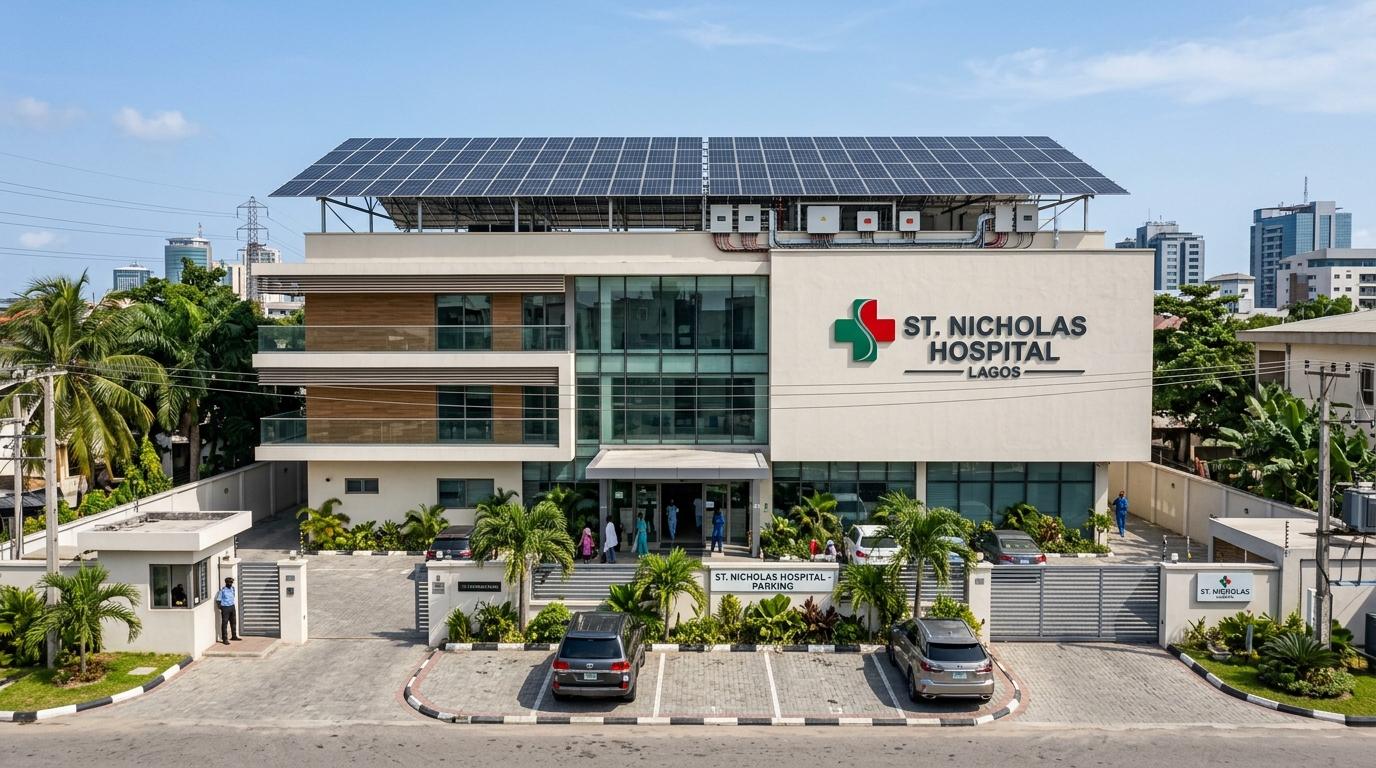
What a Hospital Solar Installation Looks Like in Nigeria
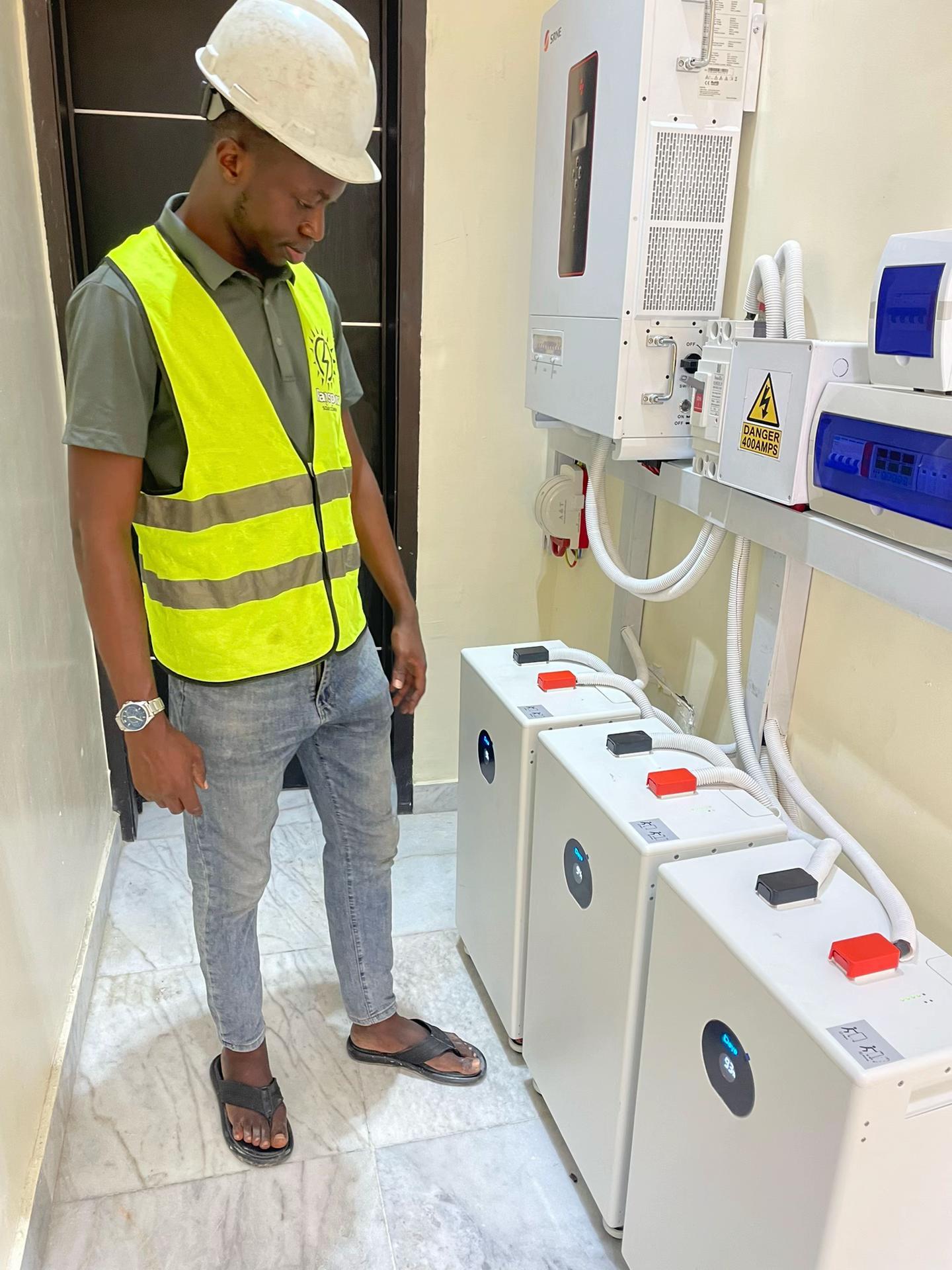
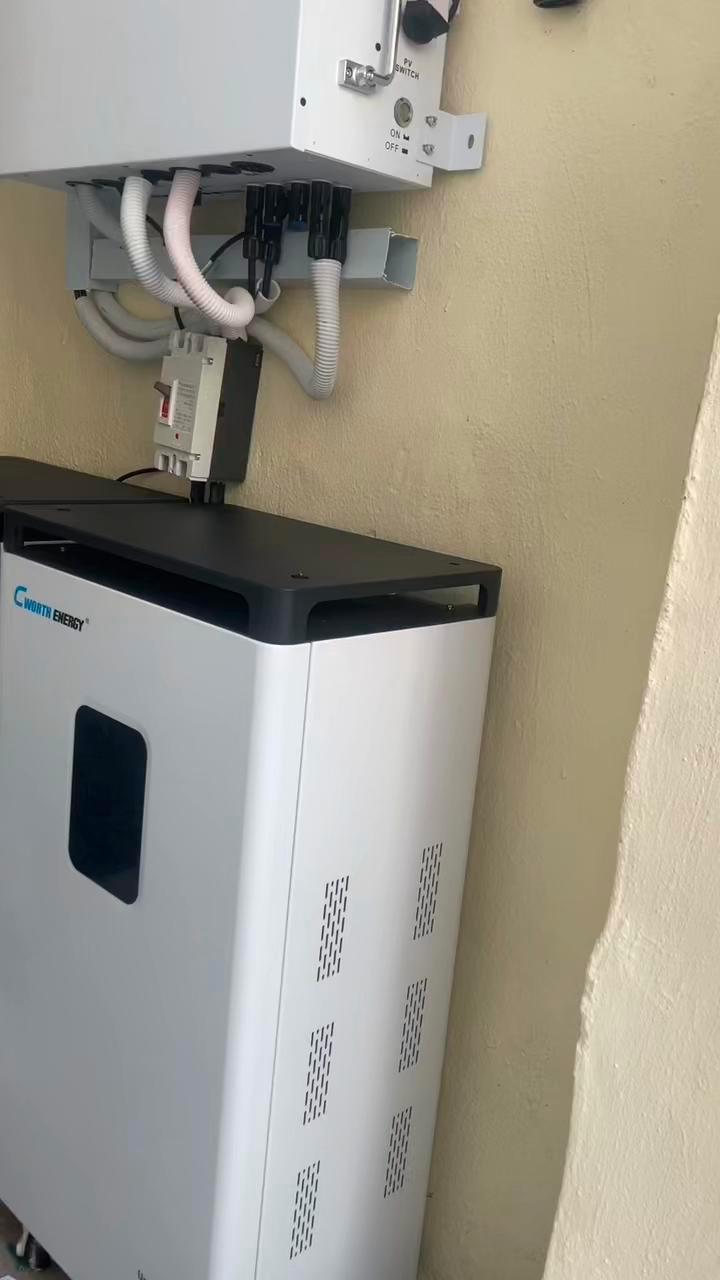
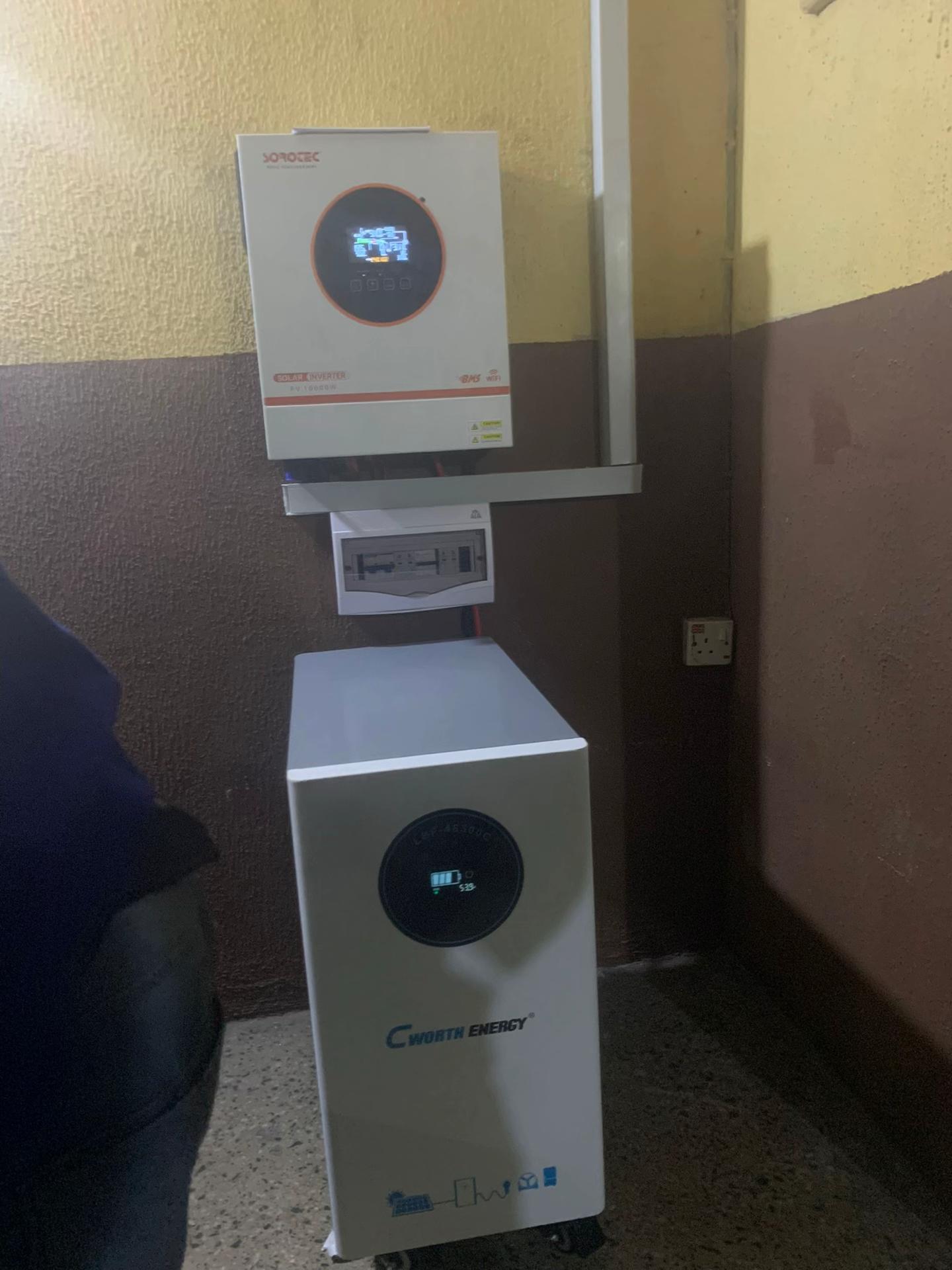
A hospital solar installation engineered by Rayspark Solar operates as a synchronized energy facility:
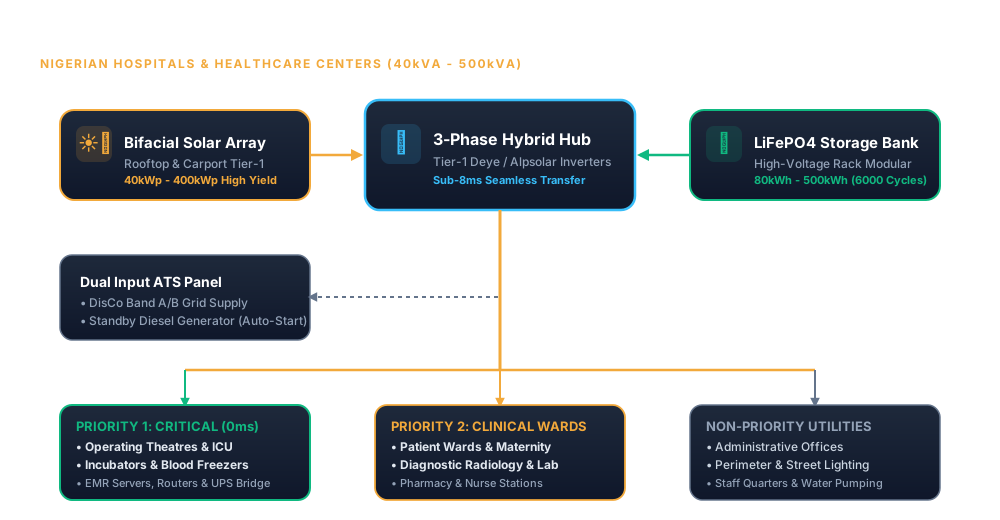
- Phase Balancing: Hospital loads are distributed equally across the three electrical phases (L1, L2, L3) to prevent neutral line overheating and ensure smooth motor operation.
- Critical Priority Segregation: In the distribution panel, life-support circuits (operating rooms, ICU, vaccine storage) are isolated on a dedicated sub-bus that never experiences power interruption, even if the non-essential administrative wing is disconnected to conserve battery power during extended rainy weather.
- Automated Grid and Gen Sync: If grid power is available, the system synchronizes seamlessly. When the grid drops, power switches in under 8 milliseconds, meaning surgical monitors and ventilators experience no flickering or rebooting.
Best Inverter and Battery Brands for Large Healthcare Organizations in Nigeria
When human lives are on the line, using budget, unverified consumer-grade equipment is dangerous. Based on extensive field performance and rigorous engineering tests across Nigerian hospitals and commercial centers, here are the best inverter and battery brands tested and trusted in Nigeria:
The Overall Best Brands to Buy (Tier 1 Premium & Heavy-Duty)
- Deye: The undisputed benchmark in Nigeria for commercial, healthcare, and industrial power. Deye high-voltage three-phase hybrid inverters (30kW to 100kW) and modular LiFePO4 battery banks offer unmatched surge tolerance, parallel scalability up to 10 units, and seamless generator ATS synchronization.
- Alpsolar (aIpsolar): Widely recognized across Nigerian healthcare centers for heavy-duty hybrid inverters and high-density lithium storage built to endure tropical ambient heat.
- Victron Energy (Vetrone): The global gold standard for clinical and industrial precision. Victron Quattro and MultiPlus inverter clusters feature heavy toroidal transformers that withstand intense inductive motor startup surges with pure sine wave precision (<2% THD).
- SRNE: A proven installer favorite across Nigeria, celebrated for bulletproof hybrid inverters, ultra-responsive MPPT charging, and rock-solid reliability in commercial clinic installations.
- Solis: Globally certified commercial inverters offering high-efficiency grid-tie and hybrid synchronization with advanced remote cloud monitoring and rapid emergency failover.
Highly Trusted Secondary Contenders (Performance & Commercial Value)
Following the top-tier leaders, these brands are tested, dependable, and widely deployed across Nigerian organizations:
- Cworth (C worth): Proven commercial battery storage banks and high-performance hybrid setups frequently paired with SRNE and Deye inverters for uninterrupted medical power.
- Growatt: High-efficiency commercial inverters (including MAX and WIT utility series) offering dual MPPT inputs and high solar string capacities.
- Lvtopsun: Durable, high-capacity lithium iron phosphate (LiFePO4) storage banks engineered for deep daily cycling under heavy commercial loads.
- Itel: Accessible, dependable, all-in-one solar energy storage systems ideal for outpatient consultation wings, administrative clinics, and pharmacy cold chain lighting.
- Ecolion: High-durability LiFePO4 rackmount and wall-mounted batteries equipped with intelligent smart BMS protection against overcharging and short circuits.
- Luxwatt & Luxsun: Cost-effective, dependable commercial hybrid inverters and battery systems delivering stable power and excellent return on investment across Nigerian private hospitals.
Real Nigerian Hospitals That Have Gone Solar (Case Studies 2025–2026)
Healthcare electrification across Nigeria has demonstrated that transitioning to solar power dramatically reduces maternal mortality, preserves critical vaccine stocks, and restores hospital financial viability.
In a prominent 60-bed surgical medical center in Southwest Nigeria, diesel expenses were draining ₦11,500,000 every month. Following the installation of a 60kVA Deye 3-phase hybrid system paired with a 120kWh high-voltage lithium battery bank, monthly diesel expenditure dropped to under ₦1,200,000—delivering an immediate 89% reduction in generator overhead. Surgical operations proceed continuously without anxiety over sudden blackouts, laboratory blood freezers maintain consistent -30°C preservation, and digital patient record servers operate without unexpected downtime.
How Nigerian Hospitals Achieve 24/7 Power Supply and Protect Electronic Medical Records (EMR)
Deploying Electronic Medical Records (EMR) and Hospital Management Systems (HMS) in Nigeria introduces severe technical vulnerabilities when relying on unstable public electricity or standalone generators:
- Zero-Interruption Critical Load Segregation: Nigerian healthcare facilities must isolate critical circuits (intensive care units, operating theatres, infant incubators, laboratory refrigerators, central EMR servers, and nursing triage desks) onto dedicated inverter output sub-buses with 0 to 8-millisecond automatic transfer switch (ATS) protection.
- Double-Conversion UPS Bridge for IT Infrastructure: While hybrid inverters switch rapidly, on-premise clinical servers running database software (such as OpenMRS or Bahmni) and local network switches require dedicated online double-conversion UPS units. This provides clean voltage regulation and an uninterrupted power bridge, eliminating database corruption, disk sector damage, and transaction aborts during generator starts.
- Resilience for HMO Billing and Cashier Terminals: In Nigerian private and mission hospitals, power cuts at patient discharge points frequently freeze point-of-sale (POS) terminals and cashier reconciliation. Dedicated solar circuits paired with offline-first or hybrid cloud EMR architecture ensure that billing staff continue printing receipts and clearing patient admissions even during grid collapse or telecom fiber outages.
- Three-Tier Power Hierarchy: The most cost-effective and resilient framework uses solar PV to power daytime clinical operations and charge lithium banks, transitions to LiFePO4 storage at night, and reserves the diesel generator strictly as a tertiary emergency backup during multiple days of severe monsoon cloud cover.
Source: AjirMed Healthcare Electrification & EMR Report
How to Choose the Right Power System for Your Hospital: A Decision Framework
Use this structured decision framework to determine the optimal configuration for your facility:
- Assess Your Clinical Risk Category:
- High Risk (Surgical Theatres, ICU, Dialysis, NICU): Must install Option 1 (Solar + Lithium) or Option 2 (Solar-Generator Hybrid) with sub-10ms transfer inverters. Standalone generators are unacceptable due to startup delay risks.
- Medium Risk (Outpatient Clinics, Maternity Centers): Option 2 (Solar-Generator Hybrid) provides the fastest return on investment while retaining emergency generator support.
- Low Risk / Rural Primary Health: Option 6 (Mini-Grid) or 40kVA Solar Package provides reliable basic healthcare electrification.
- Evaluate Physical Roof and Land Space: If roof space is limited, ground mounts or solar carports in patient parking areas can be deployed.
- Calculate 3-Year Fuel Costs vs Solar Capex: Sum your monthly diesel receipts over the past 12 months. In almost all Nigerian hospitals, 18 to 24 months of generator fuel expenses will completely fund a permanent 60kVA to 120kVA solar power station.
Component Longevity and How to Make Your Hospital System Last
- Solar Panels: Tier-1 bifacial panels carry a 25-year performance warranty, degrading at less than 0.5% per year. Clean panel surfaces twice monthly during harmattan to prevent dust occlusion.
- Lithium LiFePO4 Batteries: Rated for 6,000 to 8,000 cycles, equivalent to 12 to 15 years of daily cycling. Maintain the battery room between 20°C and 25°C with dedicated solar-powered cooling.
- Hybrid Inverters: Expected lifespan of 10 to 15 years. Install Type 1+2 surge protection devices to protect internal electronics from lightning strikes on external power lines.
Installation Process: Commissioning Within 3 Days to 1 Week
Hospital operations cannot pause for lengthy construction. Rayspark Solar utilizes pre-commissioned, factory-tested modular sub-assemblies:
- Days 1 – 2: Structural roof racking installation, solar panel mounting, and DC string conduit routing.
- Days 3 – 4: High-voltage lithium battery bank positioning, inverter installation, and earthing system testing (<3 ohms).
- Days 5 – 6: Distribution board segregation into critical and non-critical loads, ATS wiring, and generator dry-contact configuration.
- Day 7: Live clinical load stress-testing, thermal imaging verification of all busbar connections, remote cloud monitoring handover, and commissioning.
Where to Buy and Book Your Hospital Site Assessment
Do not entrust life-support power engineering to inexperienced artisans. Rayspark Solar supplies genuine, manufacturer-warranted solar equipment and executes turnkey commercial installations across all 36 states in Nigeria.
Our mobile engineering teams travel directly to your hospital location in Lagos, Abuja, Port Harcourt, Ibadan, Kano, Enugu, Benin, Jos, or any other state.
- Direct Call / WhatsApp: +234 706 482 6896
- WhatsApp Chat Link: https://wa.me/2347064826896
- Head Office: Alabama Street, Akala Way, Ibadan, Oyo State
- Lagos Office: 231 Herbert Macaulay Way, Yaba, Lagos State
- Akure Office: 24 Aule Road, Akure, Ondo State
- TikTok: @omowumitaye / @raysparksolar
- Facebook: Rayspark Solar on Facebook
You can also estimate your facility's energy requirements using our Rayspark Solar Load Calculator or explore our Solar Financing Plans to pay in manageable installments.
Our Team
Frequently Asked Questions (FAQs)
What happens when grid power cuts during an active surgical operation?
With a Rayspark Solar medical-grade hybrid system, the transition takes between 0 and 8 milliseconds. This is imperceptible to sensitive medical electronics. Surgical lamps, anesthesia monitors, and patient ventilators continue operating without flickering or restarting.
Can the solar system run heavy diagnostic equipment like digital X-ray and CT scanners?
Yes. We install high-capacity three-phase hybrid inverters (e.g., 100kVA to 200kVA Deye or SunSynk) engineered with 2x surge headroom. These inverters easily absorb the high instantaneous power pulses demanded during X-ray exposures and CT scanner rotations without voltage sag.
How much space do we need for a 60kVA or 100kVA hospital solar array?
A 60kVA system requires approximately 80 to 96 units of 550W panels (around 220 to 260 square meters of roof area). A 100kVA system requires 140 to 160 panels (around 380 to 420 square meters). If roof space is insufficient, we engineer ground mount arrays or solar carports in hospital parking grounds.
How does the system switch between solar, battery, grid, and generator?
The entire process is automated through intelligent programming inside the hybrid inverter and automatic transfer switch (ATS). Solar is always prioritized. When solar is unavailable, the system draws from the lithium battery bank. If the battery bank reaches a predetermined low limit, the system can automatically blend grid power or signal your existing diesel generator to start and recharge the batteries.
Does Rayspark Solar handle installations outside Lagos and Oyo State?
Yes. We have completed residential, commercial, and healthcare installations across Nigeria. Our senior engineers deploy directly to your facility in any of the 36 states with all components, mounting materials, and testing instrumentation.
Secure 24/7 Clean Power for Your Hospital Today
Stop risking patient lives on unpredictable power cuts and exhausting your hospital operating budget on diesel fuel.
Contact Rayspark Solar today to schedule a comprehensive, professional on-site engineering assessment.
Call or WhatsApp our Technical Team at +234 706 482 6896 or click here to chat directly on WhatsApp.