.jpg&w=3840&q=75)
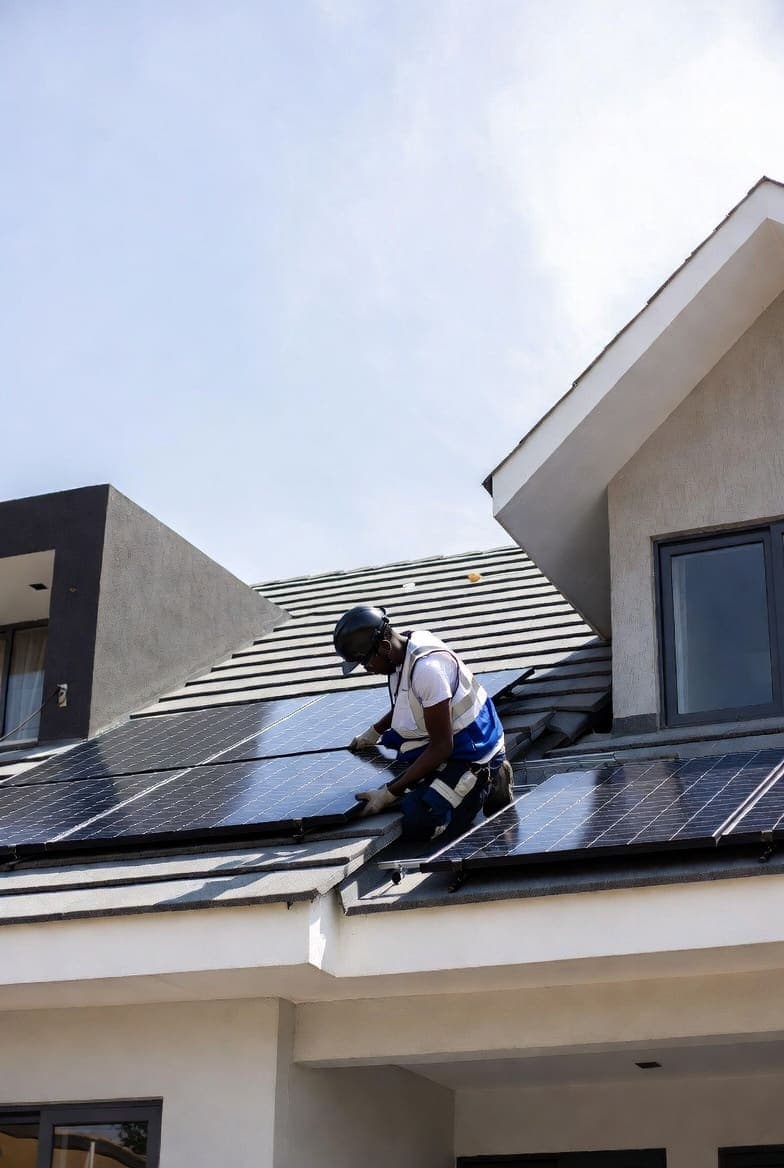
Solar for everyone: Pay Small Small
Don't let the cost stop you. Get this system installed today and pay in easy monthly installments over 6-24 months.
View Financing PlansAs your sure plug for reliable solar product supplier and installation, we at Rayspark Solar provides top-tier products to meet everyone's budget and exact needs. Call/WhatsApp: +234 706 482 6896
To get a solar loan in Nigeria, you typically need to first assess your specific energy requirements and obtain a detailed quotation from a verified and reputable installer like Rayspark Solar. Next, approach a partnering commercial bank, microfinance institution, or specialized green energy fund to submit the required documentation. These documents usually include proof of consistent income, a valid government-issued identification card, and the provided quotation. Once your application is reviewed and approved, the lending institution normally disburses the funds directly to the solar installation company to seamlessly set up your system.




Our Team
Why Consider a Solar Loan in Nigeria?
Transitioning to renewable energy is one of the most advantageous decisions you can make in Nigeria today. This is especially true given the continually rising costs of grid electricity and the persistent unpredictability of fossil fuel prices. However, the initial capital required to purchase high-quality solar panels, pure sine wave inverters, and deep-cycle lithium batteries can be quite substantial. This is exactly where a solar loan becomes incredibly beneficial and practical for the average property owner or business.
A solar loan empowers you to spread the significant cost of your solar installation over several months or even years. Instead of being burdened with paying a large lump sum upfront, you can make highly manageable monthly payments. Often, these monthly payments are comparable to or even less than what you would normally spend on purchasing fuel for a generator and paying exorbitant electricity bills. Over time, the system practically pays for itself through the accumulated savings generated by completely eliminating the need for expensive generator fuel and routine maintenance.
Steps to Secure a Solar Loan in Nigeria
Navigating the financial landscape to successfully secure a loan for your green energy setup is much easier than you might initially assume. Follow these comprehensive and detailed steps to get started on your journey to energy independence:
1. Assess Your Energy Needs
Before you can even begin the application process for a loan, you must know exactly how much power your facility requires. Do you want to power just a few basic LED lights, ceiling fans, and a television set, or do you need a robust system to run heavy appliances like air conditioners, industrial pumping machines, and large refrigerators? Identifying your precise energy requirements helps accurately determine the size of the inverter, the total number of solar panels, and the necessary battery capacity required for your daily operations.
2. Find a Reliable Solar Installer
Once you know what you need, the immediate next step is to obtain a professional quotation. Financial institutions will strictly require an official invoice or quote from a recognized and reputable solar company before they can even process your loan application. Reach out to Rayspark Solar for a comprehensive site assessment and a detailed quote tailored to your specific needs. Our team of expert technicians will ensure you receive a system design that works flawlessly for your home or business environment.
3. Compare Financing Options
Several progressive institutions in Nigeria currently offer specialized loans dedicated to renewable energy access. These institutions include major commercial banks, microfinance banks, and innovative fintech companies focusing exclusively on green energy solutions. Take the necessary time to carefully compare their annual interest rates, maximum repayment tenures, and any potential hidden administrative charges. Some highly popular financing options currently available include the Sterling Bank Alternative Power loan, Access Bank's solar financing initiative, and various specialized credit facilities supported by the Bank of Industry or the Rural Electrification Agency.
4. Prepare Your Documentation
Just like any other formal credit facility, you must definitively prove your financial ability to repay the borrowed amount. While specific criteria naturally vary by institution, you will generally be expected to provide the following essential documents:
- A valid means of government identification, such as a National ID card, Driver's License, or International Passport.
- Comprehensive bank statements for the last six months demonstrating a consistent flow of income.
- Verifiable proof of residential or business address, usually in the form of a recent utility bill.
- A proforma invoice from a registered and highly trusted solar installation company, such as Rayspark Solar.
- A recent passport photograph.
5. Apply and Get Approved
Submit your fully completed application along with all the necessary supporting documents to your chosen financial institution. Many modern banks and forward-thinking fintechs now offer streamlined online application portals, making the entire process significantly faster and far more convenient. Once your application is thoroughly reviewed and officially approved, the institution will typically disburse the approved funds directly to the solar company to promptly commence the installation.
Common Requirements for a Solar Loan
When preparing to apply, it is crucial to understand that lenders want to minimize their risk. Therefore, having a clean financial record is paramount. You must not have any outstanding delinquent debts or a history of defaulting on previous credit facilities. Additionally, lenders will calculate your debt-to-income ratio to ensure that adding a new monthly payment will not overstretch your current financial capabilities.
Pros and Cons of Solar Loans
To help you make a fully informed and balanced decision, here are the primary advantages and potential drawbacks associated with taking out a loan to finance your solar system.
Pros
- Immediate Access to Power: You do not have to wait for months or years until you have saved up the full required amount. You can get your solar system installed and start enjoying uninterrupted, twenty-four-hour electricity immediately.
- Substantial Cost Savings: The significant amount of money you regularly save on generator maintenance, engine oil, and fuel can be directly redirected towards effortlessly paying off the monthly loan installments.
- Flexible Repayment Schedules: You can comfortably choose a repayment plan that perfectly aligns with your current monthly budget, with typical tenures ranging anywhere from six months to three full years.
- Property Value Addition: Professionally installing a high-quality solar system instantly increases the overall market value of your residential or commercial property.
Cons
- Accrued Interest Rates: Loans inevitably come with interest, meaning the absolute total amount you pay back over time will naturally be higher than the straightforward outright purchase price.
- Financial Commitment: You must be completely prepared to make consistent and timely monthly payments for the entire duration of the loan agreement. Defaulting on these payments can severely and negatively impact your credit score.
- Documentation Hassles: Gathering the necessary rigorous paperwork and successfully meeting the strict bureaucratic criteria of some traditional commercial banks can sometimes be quite time-consuming and exhausting.
Frequently Asked Questions (FAQs)
Can I get a solar loan without providing collateral? Yes, you certainly can. Many modern microfinance banks and innovative fintech companies offer unsecured solar loans based purely on your verifiable cash flow and positive credit history, provided the loan amount is strictly within their specified borrowing limits. Furthermore, the newly installed solar equipment itself often effectively serves as the primary collateral for the facility.
How long does it realistically take for a solar loan to be fully approved? Approval timelines tend to vary significantly depending on the specific institution you choose. It can take anywhere from a remarkably swift twenty-four hours to a couple of weeks, provided all your submitted documentation is entirely complete, legible, and highly accurate.
Is it ultimately cheaper to take a loan or to just pay outright? Paying outright is always the cheaper option because you completely avoid paying any accumulated interest over time. However, if paying the total lump sum outright severely strains your current finances, a structured loan is a highly practical alternative that allows you to enjoy the immediate, life-changing benefits of solar energy.
Do I absolutely need to have a bank account with the lending institution? In most standard cases, large commercial banks will strictly require you to have an active operating account domiciled with them. However, several modern fintech companies and specialized credit organizations do not have this rigid requirement, offering far more flexibility to prospective borrowers.
Conclusion
Securing a solar loan in Nigeria is undoubtedly a smart, forward-thinking financial move that brings you much closer to total energy independence. By intelligently spreading the capital cost over an extended period, you can permanently eliminate the unbearable noise, toxic pollution, and constantly recurring expenses of a traditional generator without suddenly breaking the bank. Always ensure you work closely with verified industry professionals to get the absolute best long-term value for your investment.
Are you ready to make the definitive switch to reliable, clean, and uninterrupted power? Let us help you successfully start the process right now. Call/WhatsApp Rayspark Solar at +234 706 482 6896 today to get a fully customized quote and expert guidance on your upcoming solar installation. We are deeply dedicated to providing top-tier products to comfortably meet everyone's budget and exact energy needs.