.jpg&w=3840&q=75)
Solar for everyone: Pay Small Small
Don't let the cost stop you. Get this system installed today and pay in easy monthly installments over 6-24 months.
View Financing PlansAs your sure plug for reliable solar product supplier and installation, we at Rayspark Solar provides top-tier products to meet everyone's budget and exact needs. Call/WhatsApp: +234 706 482 6896.
To quickly answer the debate between hybrid and off-grid solar setups: An off-grid solar system operates completely independently from the national electricity grid, relying entirely on solar panels and batteries to generate and store power. In contrast, a hybrid solar system is tied to the national grid while also utilizing battery storage, allowing you to draw power from the grid when your solar panels and batteries are depleted, and simultaneously giving you the ability to charge your batteries using grid power when solar generation is low.




Our Team
Understanding Solar Power Systems in Nigeria
The energy landscape in Nigeria presents unique challenges. With erratic power supply and the rising cost of petrol and diesel for standby generators, many homeowners and business operators are making the logical transition to renewable energy. Solar power has proven to be the most viable, cost-effective, and environmentally friendly alternative to grid instability.
However, making the transition to solar requires crucial decisions, the most important being the type of system architecture to deploy. The two most prominent choices for the Nigerian market are off-grid systems and hybrid systems. Understanding the technical and practical differences between these two configurations is essential for making an informed investment that guarantees uninterrupted power supply while maximizing your return on investment.
What is an Off-Grid Solar System?
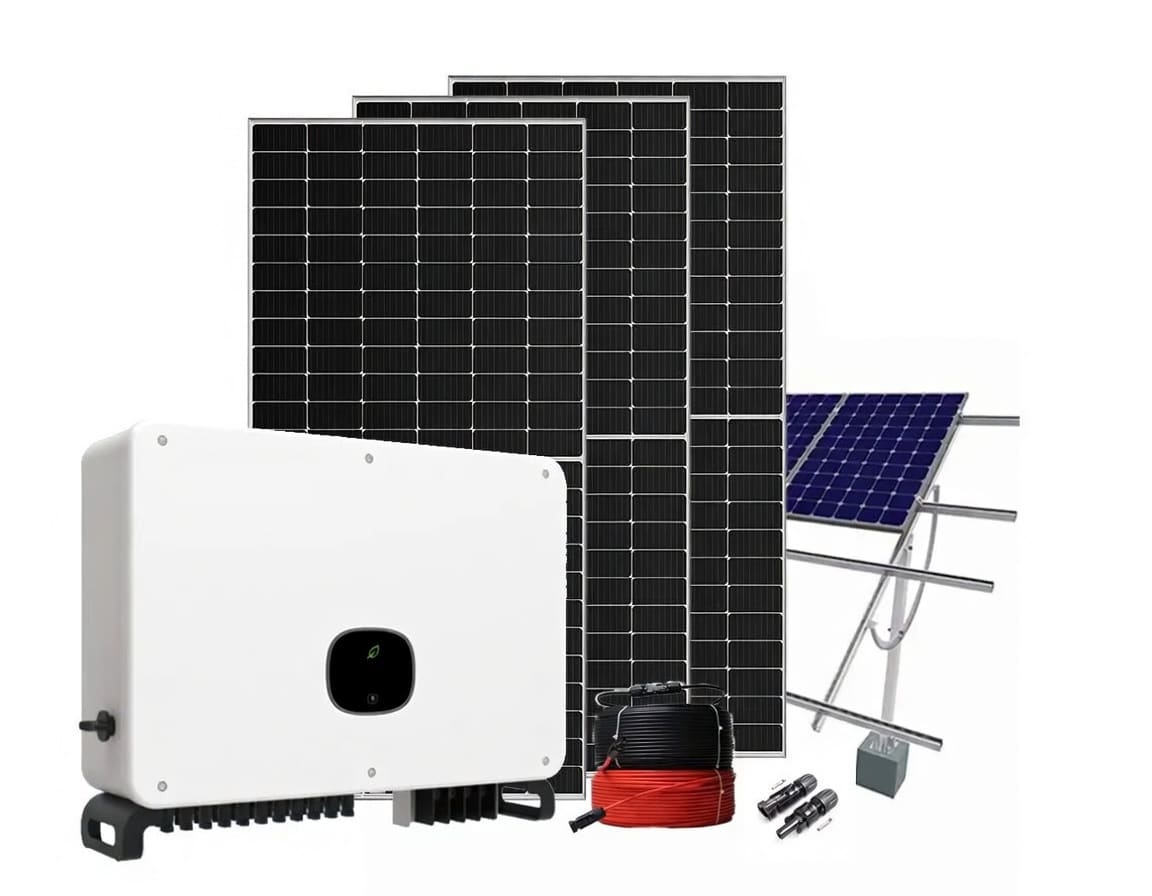
An off-grid solar system is a standalone power generation unit. It is designed to operate completely independent of the national grid. This means that all the electricity required to power your home or business must be generated by your solar panels and stored in your battery bank.
How Off-Grid Systems Work
During the day, the solar panels generate direct current electricity from sunlight. This power is routed through a charge controller to charge the battery bank and simultaneously supply power to an inverter, which converts the current into alternating current for your appliances. Because there is no connection to the national grid, the system must be sized perfectly to cover your daily energy consumption and store enough power to get you through the night and cloudy days.
Pros and Cons of Off-Grid Solar Systems
Pros:
- Total energy independence from the national grid.
- Immunity to grid failures, blackouts, and voltage fluctuations.
- Ideal for remote areas where grid connection is unavailable or prohibitively expensive.
- Fixed long-term energy costs with no monthly electricity bills.
Cons:
- Requires a significantly larger battery bank to ensure continuous power during extended periods of poor weather, which increases the initial capital cost.
- Needs more solar panels to ensure batteries can be fully charged quickly.
- Any excess power generated when batteries are full and appliances are off is essentially wasted, as it cannot be exported to a grid.
What is a Hybrid Solar System?
A hybrid solar system combines the best of both worlds: it utilizes solar panels and battery storage, much like an off-grid system, but it remains connected to the national grid. The core component of this setup is a hybrid inverter, which intelligent manages power from the solar panels, the batteries, and the grid simultaneously.
How Hybrid Systems Work
A hybrid system prioritizes solar energy. When the sun is shining, the panels power your home and charge the batteries. If the solar panels generate more power than you need and the batteries are full, the hybrid inverter can stop drawing from the panels. Crucially, if your solar panels are not producing enough power (such as during heavy rain) and your batteries are depleted, the hybrid inverter will automatically and seamlessly switch to grid power to keep your appliances running. Furthermore, hybrid inverters can use grid power to charge your batteries, ensuring you have backup power ready for the next grid outage.
Pros and Cons of Hybrid Solar Systems
Pros:
- Lower initial cost compared to strict off-grid systems, as you do not need an oversized battery bank for worst-case weather scenarios.
- High reliability due to the fallback option of grid power.
- Highly efficient use of power; batteries can be charged by both the sun and the grid.
- Seamless automatic changeover between solar, battery, and grid power without user intervention.
Cons:
- You are still partially reliant on the grid, meaning you may still incur some electricity bills depending on usage.
- Grid voltage fluctuations can sometimes affect the system if not properly protected with voltage guards.
Key Differences: Hybrid vs Off-Grid Solar Systems
When comparing these two setups, several factors come into play:
Cost Comparison
Off-grid systems are generally more expensive upfront. To achieve true autonomy, you must heavily invest in a massive battery bank and a larger array of solar panels. Hybrid systems require a smaller battery bank because the grid serves as an ultimate backup, lowering the barrier to entry for many homeowners.
Reliability and Backup Strategy
While off-grid systems give you complete independence, a streak of cloudy days can leave you without power if your batteries run dry. Hybrid systems offer superior peace of mind; if your battery bank depleulates, the system seamlessly pulls from the grid, ensuring continuous operation.
Expandability
Both systems can be expanded, but hybrid systems offer more flexibility. You can start with a smaller battery bank and fewer panels, relying on the grid to bridge the gap, and then scale up your solar array and storage capacity over time as your budget allows.
Which System is Right for You?
Best Use Cases for Off-Grid Systems
Off-grid systems are strictly recommended for rural areas, farm settlements, or remote project sites where connecting to the national grid is physically impossible or financially unviable. They are also suitable for individuals who desire absolute energy independence and have the budget to invest in a massive storage setup.
Best Use Cases for Hybrid Systems
For 95 percent of homes and businesses in urban and semi-urban areas in Nigeria, a hybrid system is the definitive choice. It provides the perfect balance of cost-effectiveness, reliability, and convenience. By leveraging the grid as a backup while primarily using solar energy to slash your running costs, hybrid systems deliver the best return on investment.
Maximizing Your Solar Investment
Before choosing either system, it is crucial to perform a comprehensive load audit. Understanding your total wattage and peak power demands will dictate the size of the inverter, the number of panels, and the battery capacity required. We highly recommend using our specialized tools or consulting with our experts to determine your exact needs. You can explore our pre-designed solutions on our solar packages page to find a system that aligns with your energy consumption profile.
Frequently Asked Questions (FAQs)
Can I upgrade an off-grid system to a hybrid system later? Yes, but this typically involves replacing the off-grid inverter with a hybrid inverter, which can be an expensive modification. It is usually better to start with a hybrid inverter if you anticipate needing grid integration.
Do hybrid inverters work without batteries? Some advanced hybrid inverters can operate without batteries by blending solar power and grid power directly. However, in Nigeria where grid power is unreliable, having a battery bank is essential to provide backup power during outages.
How long do solar batteries last in these systems? The lifespan depends on the battery chemistry. Lithium-ion (LiFePO4) batteries, which are highly recommended for both hybrid and off-grid setups, can last between ten to fifteen years with proper depth of discharge management. Traditional tubular or AGM batteries typically last three to five years.
Is maintenance different between the two systems? Maintenance is largely similar. Both require regular cleaning of solar panels and periodic checks of electrical connections. Battery maintenance depends more on the battery type than the system type.
Conclusion
Deciding between a hybrid and an off-grid solar system ultimately comes down to your location, budget, and power needs. While off-grid systems offer total independence, hybrid systems provide unmatched reliability and cost-efficiency for urban dwellers. Making the right choice ensures you enjoy uninterrupted power for years to come.
Ready to say goodbye to power outages and expensive generator running costs? As your sure plug for reliable solar product supplier and installation, we at Rayspark Solar provides top-tier products to meet everyone's budget and exact needs. Contact us today to get started! Call/WhatsApp: +234 706 482 6896.